Home › Damp proofing
Damp proofing
in Croydon
Three different problems look identical on a wall, and only one of them is rising damp. We work out which you have before anybody talks about replastering.
Start here
Damp is three different problems that look the same on the wall
They need different work, and the wrong one is money spent for nothing. Before anything is replastered, it is worth knowing which of these you have.
Type one
Penetrating damp
Water coming through from outside. Failed or cracked render, open pointing, a blocked or leaking gutter, a slipped tile, a bridged cavity, or a leak inside the wall.
- Usually a patch, not a band
- Worse after heavy rain
- Often on an exposed or weather-facing wall
Type two
Condensation
Moisture already in the air with nowhere to go, settling on the coldest surface in the room. The most common damp of the three and the one most often misdiagnosed as rising damp.
- Black spot mould, often in corners
- Worst in winter, bathrooms and bedrooms
- Behind furniture against an outside wall
Type three
Rising damp
Groundwater drawn up through the wall where there is no damp proof course, where the original one has failed, or where it has been bridged by a raised path, a flower bed or render carried too low.
- A tide mark, roughly a metre up
- Salting and blown plaster at skirting level
- Ground floor only
What the work involves
Cause first. Plaster second.
The work follows what is actually wrong, which is why the first visit is a look rather than a quote over the phone. Depending on what is found, a damp job can involve any of this:
- Dealing with the cause — or telling you who needs to. A gutter, a roof or a raised path is not a plastering job, and plastering over it will not fix it.
- Injecting a new damp proof course where the original has failed or was never there — drilled at mortar level and injected along the wall.
- Hacking off contaminated plaster well past the damage. Old plaster holds the salts that pull moisture back in, so it has to come off rather than be covered.
- A salt-retardant or tanking coat so the next finish does not blow the way the last one did.
- Replastering back to a finish ready for decorating, and clearing out the rubble that comes with it.
Why a replaster alone fails. Fresh plaster over a damp wall looks perfect for a few months. Then the salts come through, the paint lifts, and you are back where you were having paid for it twice. If somebody offers to just skim over it, ask what they think is causing it.
Drying out afterwards
A wall that has been wet for years does not dry in a fortnight. Plaster goes on, but the wall behind it keeps giving up moisture for months — so leave it as long as you can before decorating, keep the room ventilated and heated, and use a mist coat first.
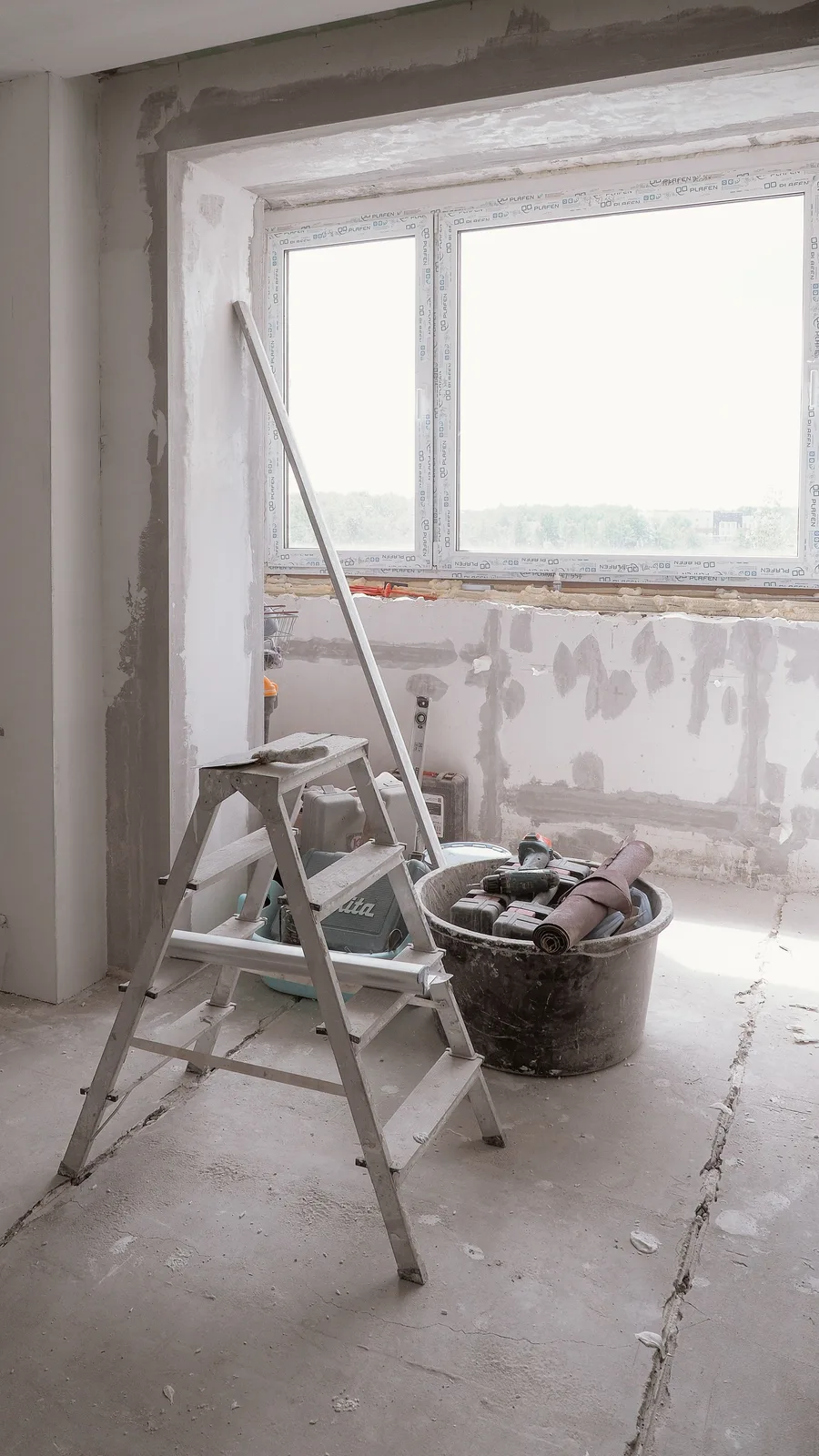
Taken back, cleared and ready for the new plaster to go on.
Being straight about it
What we will and will not tell you
We will say if it is not rising damp
Most walls we are called to are condensation or something leaking. Saying so costs us the bigger job and saves you the bigger bill, and it is the only way this works.
We will not quote damp down a phone
A tide mark can be four different things. Pricing it without looking means either guessing high or coming back to you with bad news halfway through.
We will tell you what is not ours
If the roof, the guttering or the ground levels are the problem, that is the job that needs doing first — and it is not a plastering job.
Photographs help enormously
Send two or three on WhatsApp before we come out: the wall, the skirting, and the outside of the same wall. It tells us more than a paragraph can.
What to expect
How the job runs
Send photos first
The wall, the skirting, and the outside of the same wall. It often narrows it down before we arrive.
We come and look properly
Inside and out — gutters, ground levels, pointing, ventilation. The wall is only half the story.
You get told what it actually is
Including when it is condensation or a leak and there is no damp proofing job to sell you.
The work, then the drying
Cause dealt with, plaster back on, and honest advice on how long to leave it before decorating.
Areas covered
Croydon, and ten miles in every direction
We are based in CR0 and work within a ten mile radius of it. If you are near the edge of that, ring and ask — it depends what else is on that week.
- Croydon CR0
- Thornton Heath
- South Norwood
- Purley
- Coulsdon
- Wallington
- Carshalton
- Sutton
- Mitcham
- Streatham
- Beckenham
- Bromley (west side)
- Caterham
- Warlingham